Key Technical & Functional Features
Wide-Area Coverage & Base Repeaters
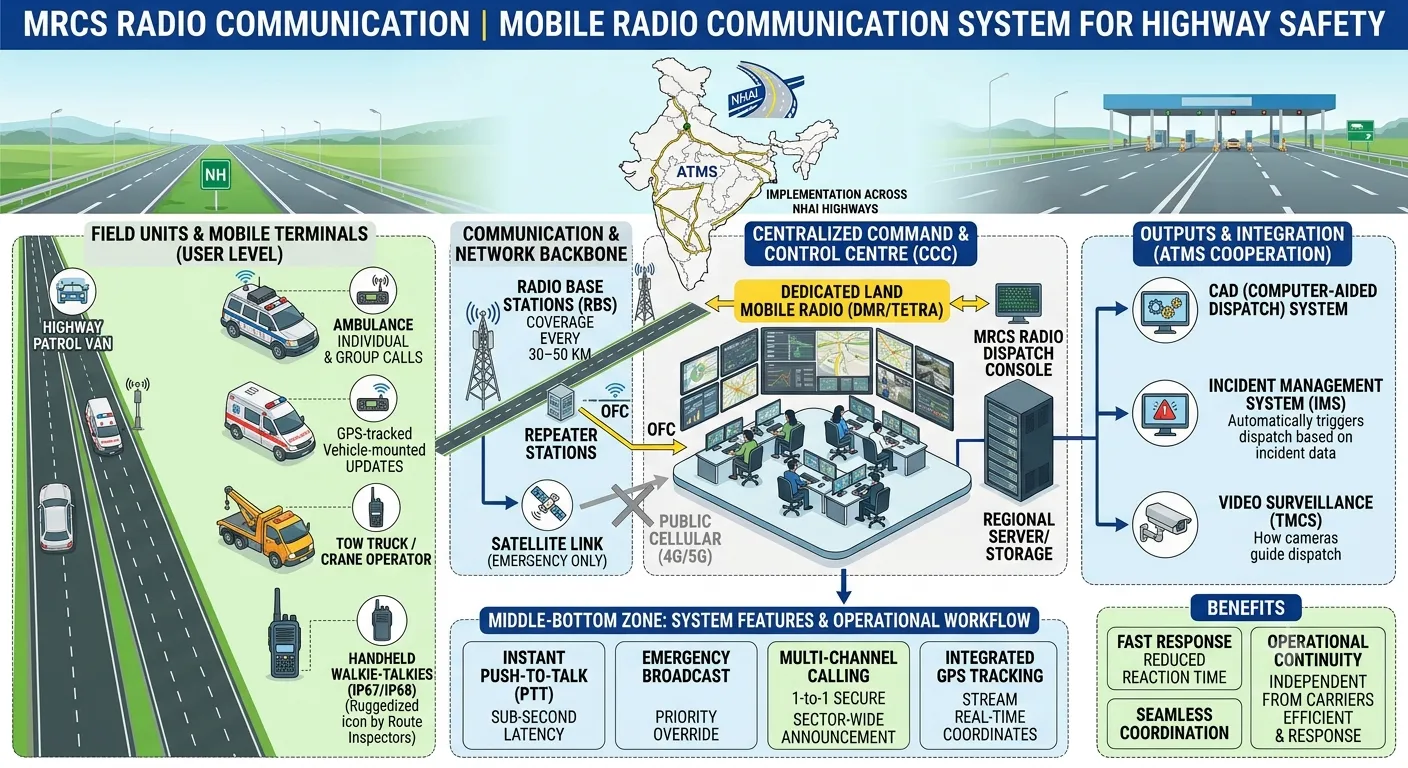
High-gain antenna masts and base repeater stations installed strategically along high-speed corridors (typically every 30–50 km) ensure uninterrupted RF coverage.
Linked via the highway's optic fibre cable (OFC) network to form a unified communications grid.
Multi-Channel & Group Calling Capabilities
Individual Calling: Direct 1-to-1 secure calling between the controller and a specific driver/patrol van.
Group Calling: Sector-wide announcements (e.g., dispatching all emergency units in a 20 km zone).
Emergency Broadcast / Priority Override: Control room operators can override active calls to issue high-priority emergency alerts.
Integrated GPS & Fleet Tracking
Mobile radio terminals feature integrated GPS modules that stream real-time vehicle coordinates to the ATMS Computer-Aided Dispatch (CAD) system.
Allows the central operator to dispatch the closest ambulance, patrol unit, or tow crane to an incident location automatically.
Hardware Specifications & Durability
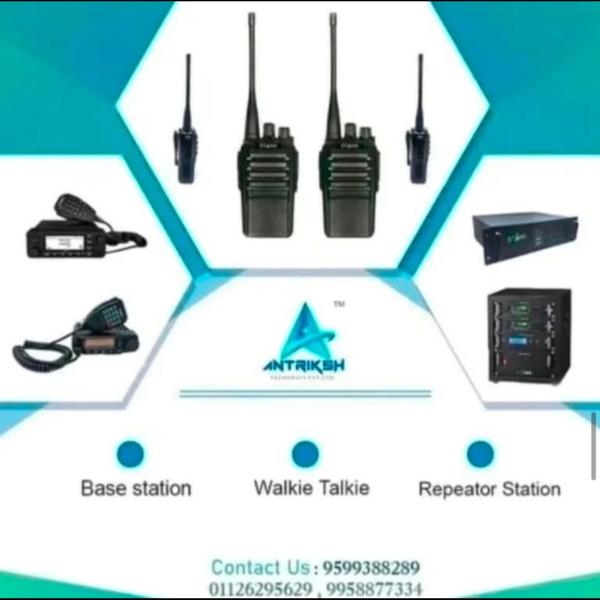
Base Terminals: Installed at central control desks with desktop microphones, foot switches, and multi-channel monitoring capabilities.
Vehicle-Mounted Radios: High-wattage (25W–45W) mobile radios installed on patrol vans, ambulances, and cranes.
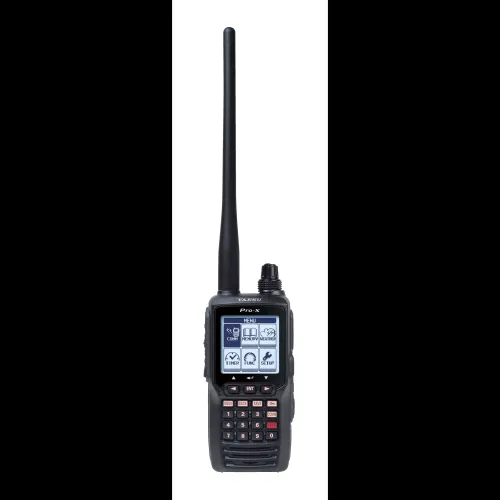
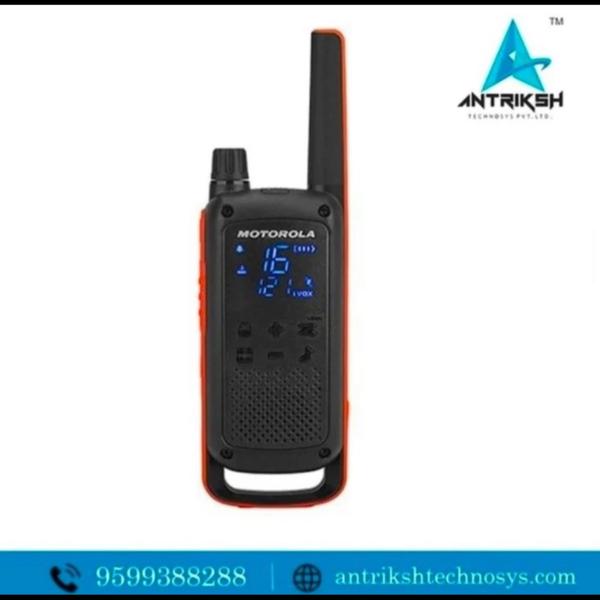
Handheld Portables: IP67/IP68 weather-proof, dust-proof walkie-talkies assigned to ground personnel, highway inspectors, and toll operators.
Key Technical & Functional Features
Wide-Area Coverage & Base Repeaters
High-gain antenna masts and base repeater stations installed strategically along high-speed corridors (typically every 30–50 km) ensure uninterrupted RF coverage.
Linked via the highway's optic fibre cable (OFC) network to form a unified communications grid.
Multi-Channel & Group Calling Capabilities
Individual Calling: Direct 1-to-1 secure calling between the controller and a specific driver/patrol van.
Group Calling: Sector-wide announcements (e.g., dispatching all emergency units in a 20 km zone).
Emergency Broadcast / Priority Override: Control room operators can override active calls to issue high-priority emergency alerts.
Integrated GPS & Fleet Tracking
Mobile radio terminals feature integrated GPS modules that stream real-time vehicle coordinates to the ATMS Computer-Aided Dispatch (CAD) system.
Allows the central operator to dispatch the closest ambulance, patrol unit, or tow crane to an incident location automatically.
Hardware Specifications & Durability
Base Terminals: Installed at central control desks with desktop microphones, foot switches, and multi-channel monitoring capabilities.
Vehicle-Mounted Radios: High-wattage (25W–45W) mobile radios installed on patrol vans, ambulances, and cranes.
Handheld Portables: IP67/IP68 weather-proof, dust-proof walkie-talkies assigned to ground personnel, highway inspectors, and toll operators.
Wide-Area Coverage & Base Repeaters
High-gain antenna masts and base repeater stations installed strategically along high-speed corridors (typically every 30–50 km) ensure uninterrupted RF coverage.
Linked via the highway's optic fibre cable (OFC) network to form a unified communications grid.
Multi-Channel & Group Calling Capabilities
Individual Calling: Direct 1-to-1 secure calling between the controller and a specific driver/patrol van.
Group Calling: Sector-wide announcements (e.g., dispatching all emergency units in a 20 km zone).
Emergency Broadcast / Priority Override: Control room operators can override active calls to issue high-priority emergency alerts.
Integrated GPS & Fleet Tracking
Mobile radio terminals feature integrated GPS modules that stream real-time vehicle coordinates to the ATMS Computer-Aided Dispatch (CAD) system.
Allows the central operator to dispatch the closest ambulance, patrol unit, or tow crane to an incident location automatically.
Hardware Specifications & Durability
Base Terminals: Installed at central control desks with desktop microphones, foot switches, and multi-channel monitoring capabilities.
Vehicle-Mounted Radios: High-wattage (25W–45W) mobile radios installed on patrol vans, ambulances, and cranes.
Handheld Portables: IP67/IP68 weather-proof, dust-proof walkie-talkies assigned to ground personnel, highway inspectors, and toll operators.
Key Technical & Functional Features
Wide-Area Coverage & Base Repeaters
High-gain antenna masts and base repeater stations installed strategically along high-speed corridors (typically every 30–50 km) ensure uninterrupted RF coverage.
Linked via the highway's optic fibre cable (OFC) network to form a unified communications grid.
Multi-Channel & Group Calling Capabilities
Individual Calling: Direct 1-to-1 secure calling between the controller and a specific driver/patrol van.
Group Calling: Sector-wide announcements (e.g., dispatching all emergency units in a 20 km zone).
Emergency Broadcast / Priority Override: Control room operators can override active calls to issue high-priority emergency alerts.
Integrated GPS & Fleet Tracking
Mobile radio terminals feature integrated GPS modules that stream real-time vehicle coordinates to the ATMS Computer-Aided Dispatch (CAD) system.
Allows the central operator to dispatch the closest ambulance, patrol unit, or tow crane to an incident location automatically.
Hardware Specifications & Durability
Base Terminals: Installed at central control desks with desktop microphones, foot switches, and multi-channel monitoring capabilities.
Vehicle-Mounted Radios: High-wattage (25W–45W) mobile radios installed on patrol vans, ambulances, and cranes.
Handheld Portables: IP67/IP68 weather-proof, dust-proof walkie-talkies assigned to ground personnel, highway inspectors, and toll operators.
Keywords